England’s World Cup dream shattered by late Argentina goals


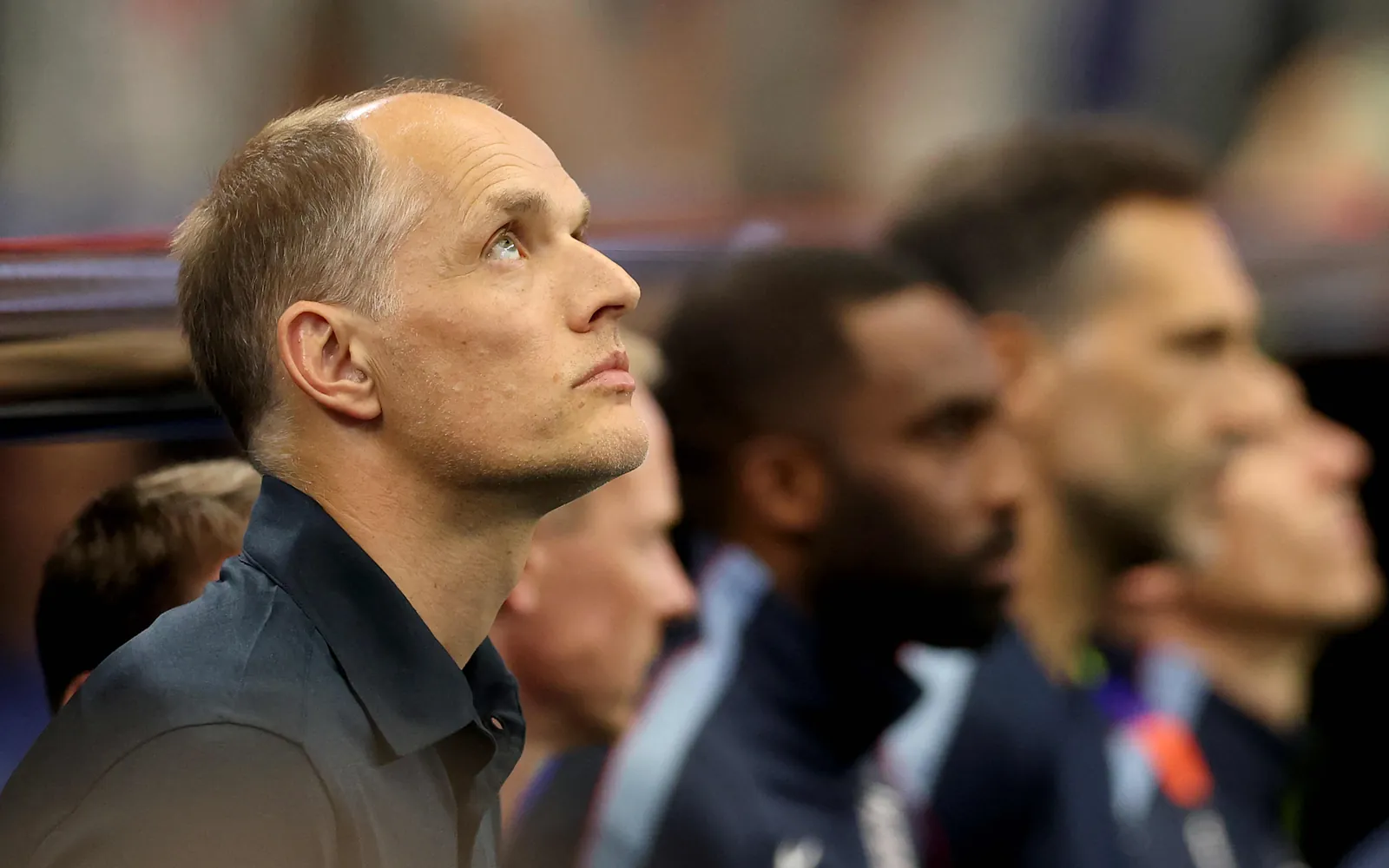
England‘s hopes of reaching their first men’s World Cup final since 1966 were dashed after Argentina scored two late goals in their semi-final clash. The Three Lions had taken a 1-0 lead, but ultimately succumbed to a 2-1 defeat, with critics questioning manager Thomas Tuchel‘s tactical decisions.
The match saw England go ahead in the 55th minute through a goal from Anthony Gordon. However, Argentina equalised in the 85th minute with a strike from Enzo Fernandez, assisted by Lionel Messi. Lautaro Martinez then secured the win for Argentina in the 92nd minute with a header, also assisted by Messi, leaving England‘s players and fans disappointed.
Following Gordon‘s goal, England adopted a more defensive approach, which many observers believe contributed to their downfall. Former England captain Wayne Rooney stated that the team “crumbled” and attributed it to the manager’s decisions, calling the approach “too passive.” He emphasised that against the reigning world champions, such tactics would not succeed.
England‘s captain, Harry Kane, echoed this sentiment, noting that after taking the lead, the team seemed to try and hold on, which he admitted “is not enough” at this level. Kane expressed his deep disappointment, highlighting the immense effort put in by the squad.
Tactical decisions under scrutiny
Thomas Tuchel‘s substitutions and overall strategy after taking the lead have drawn significant criticism. After England went 1-0 up, Tuchel made three defensive changes, bringing on Ezri Konsa for Gordon in the 72nd minute, shifting to a back five. Ten minutes later, further defensive reinforcements in Dan Burn and Nico O’Reilly were introduced. Forwards Marcus Rashford and Ivan Toney were only brought on deep into stoppage time, which many felt was too late.
Chris Sutton, a Premier League winner, described Tuchel‘s approach as a “coaching catastrophe.” He argued that defending for 30 minutes against a team of Argentina‘s quality was unsustainable. Former England defender Micah Richards also suggested that England should have pushed for a second goal after scoring, rather than allowing Argentina to gain momentum by dropping deep.
Even Argentina goalkeeper Emiliano Martinez acknowledged a shift in momentum after England‘s goal, noting that they sent on extra defenders. He suggested that sometimes, when winning, a team needs to continue to attack rather than change their game plan.
Tuchel, however, defended his decisions in the post-match news conference, stating that criticism is inevitable after a loss. He maintained that the team gave everything and played one of their best matches under the circumstances. He also pointed to the team’s resilience throughout the tournament, overcoming various obstacles including playing with ten men and in challenging conditions.
Despite Tuchel‘s defence, the debate over his tactics is expected to continue. While England reached the semi-finals, an improvement on their 2022 World Cup quarter-final exit, the manner of their defeat has left many questioning the management’s approach in crucial moments. Richards, while expressing admiration for Tuchel‘s bravery, concluded that the manager “got it wrong” on the biggest stage and must accept that.
Post-match political banner
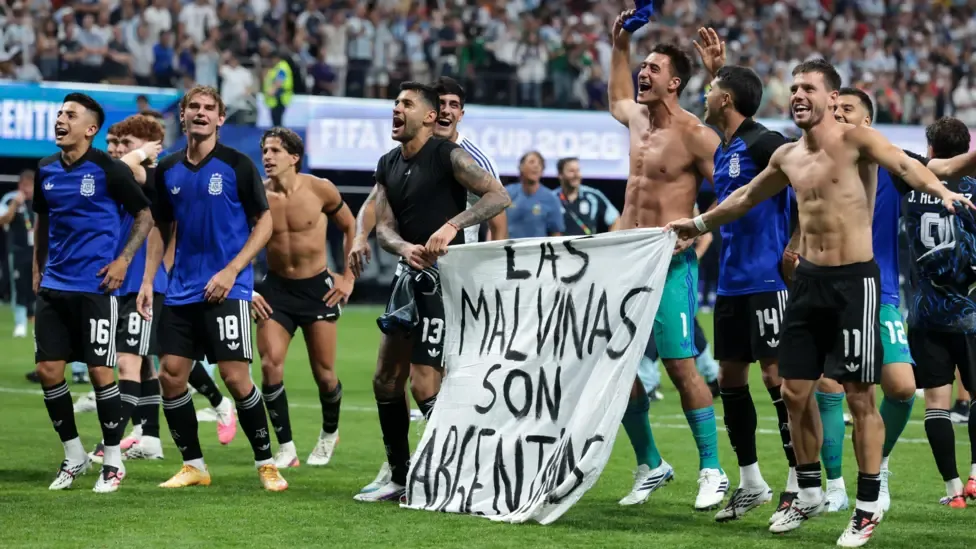
Following their victory, Argentina players displayed a political banner that read “Las Malvinas Son Argentinas” (“The Falklands are Argentine”). This action occurred after the 2-1 semi-final win over England. The banner was held up by players Lisandro Martinez and Giovani Lo Celso, who were seen smiling and waving to fans.
The display of such a banner could be seen as a contravention of FIFA rules. FIFA‘s Stadium Code of Conduct prohibits “banners, flags, flyers, apparel and other paraphernalia that are of a political, offensive, and/or discriminatory nature” inside stadiums. At the time, FIFA had not immediately responded to inquiries regarding the incident.
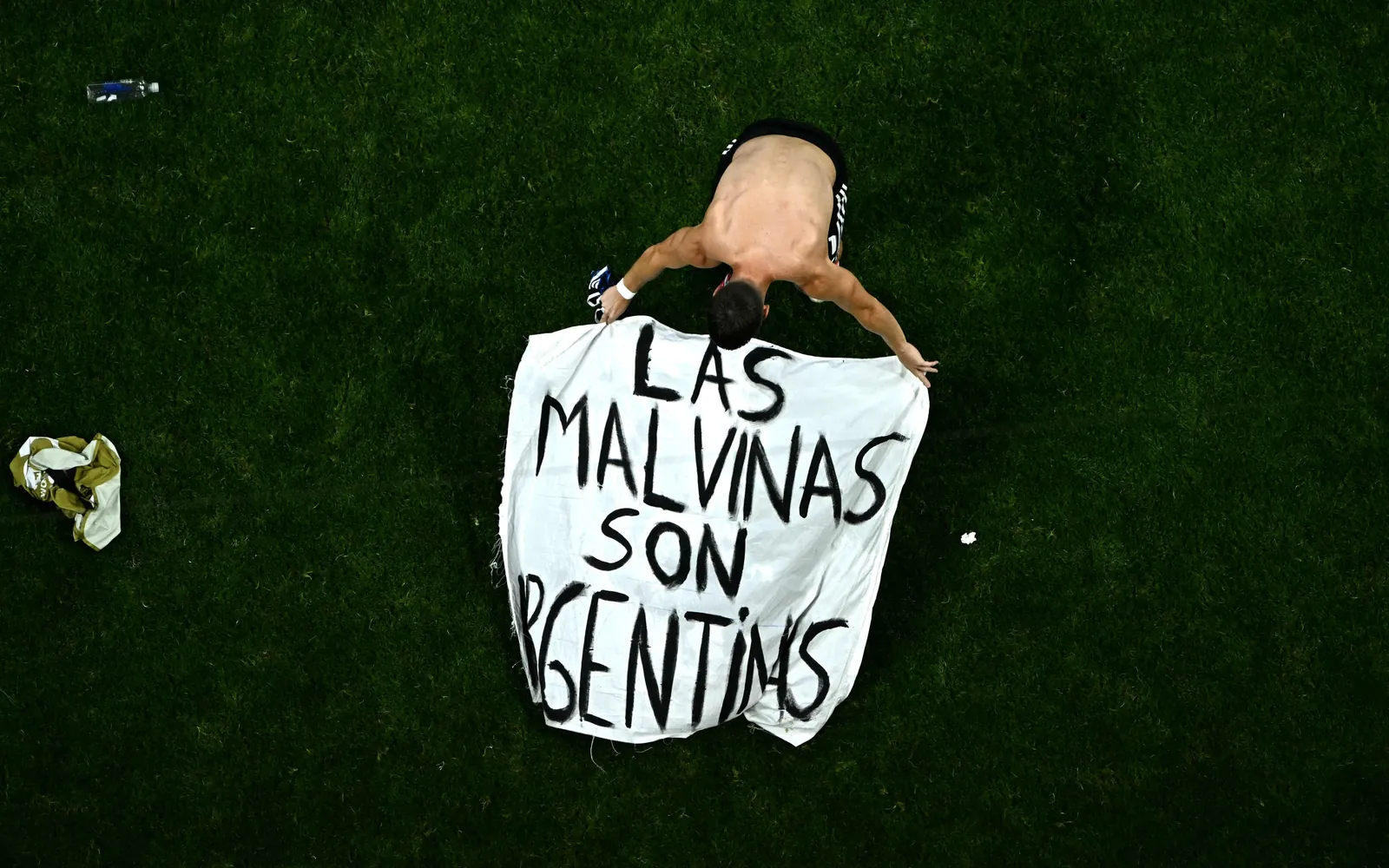
The sovereignty of the islands, known as the Falklands to the British and the Malvinas to the Argentines, has been a long-standing point of contention between the two nations. A brief conflict over the islands occurred in 1982, resulting in the deaths of 649 Argentine soldiers and 255 British combatants. Britain ultimately prevailed, and the majority of the islands’ residents have expressed a desire to remain part of Britain.
Argentina has historically claimed the islands, asserting that they were inherited from Spain after its independence in 1816 and that Britain‘s control since 1833 was an illegal colonial act. This is not the first instance of political banners appearing during the World Cup, with pre-revolutionary flags being waved by Iranian Americans during matches involving Iran last month in Los Angeles.
Argentina will now proceed to the final against Spain, scheduled for Sunday at New York New Jersey Stadium, with an 8:00 PM BST kick-off.
Read Also
- Argentina advances to World Cup final after late surge against England
- Argentina players display Falklands banner after World Cup semi-final win over England
- Royal Birkdale set for challenging Open Championship amid dry conditions
- 2026/27 Isuzu UTE A-League season fixtures released with key derby to open campaign
Source: bbc.com

