Jarell Quansah receives two-game ban after Mexico red card

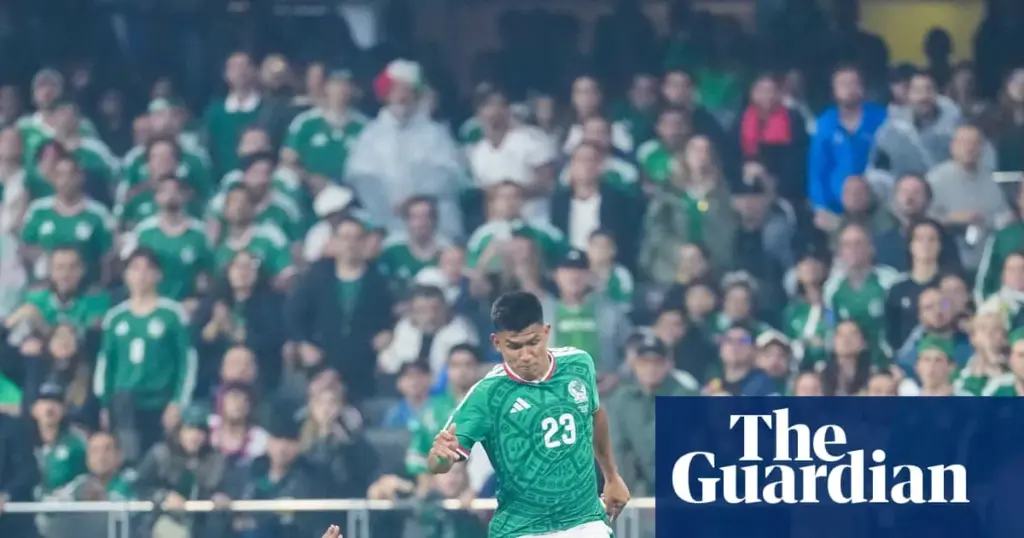
England defender Jarell Quansah has been issued a two-match ban following his red card during the World Cup last-16 victory against Mexico. The sanction, announced by Fifa, was for serious foul play, meaning the Bayer Leverkusen player received an additional game on top of the automatic one-match suspension.
Quansah was sent off in the 54th minute of the 3-2 win after a challenge on Jesus Gallardo. This decision means Quansah will miss Saturday’s quarter-final match against Norway and a potential semi-final fixture against either Argentina or Switzerland. He would be available if England progresses to the final, scheduled for 19 July in New Jersey.
Impact on England’s Defence
The ban presents a challenge for head coach Thomas Tuchel regarding the right-back position. Quansah had been filling in due to an injury to Reece James. While Djed Spence was used as a substitute, he had been dealing with a minor fitness issue. Tuchel has indicated that James is expected to be available for the Norway game after missing previous matches due to a hamstring injury sustained in the second group stage match against Ghana.
Tuchel’s assistant coach, Anthony Barry, expressed disappointment over the ban, noting the loss of a valuable player, especially given existing injuries in that position. Bukayo Saka, an England winger, described the ban as “incredibly frustrating” but emphasised the team’s need to adapt.
The Football Association had considered appealing the decision but found no avenue to contest the ban under tournament regulations. However, the FA reportedly made strong representations to Fifa regarding the process that led to Quansah’s red card. They argued that the referee was shown a still image and slow-motion replays before the incident was shown in real-time, which could have led to “outcome bias.”
VAR Protocol and Inconsistencies
The handling of Quansah’s red card has drawn comparisons to an earlier incident involving United States forward Folarin Balogun. Balogun was also sent off for serious foul play but received a one-match ban that was suspended for 12 months, a decision that generated widespread criticism. US President Donald Trump reportedly contacted Fifa president Gianni Infantino to request a review of Balogun’s red card.
Fifa stated that its decision on Balogun considered “all of the specific circumstances surrounding the incident and evidence available” without providing further details. This led to criticism from various football bodies, including Uefa and Belgium, and prompted France to challenge a yellow card issued to Michael Olise, though their appeal was dismissed.
The VAR protocol specifies that full speed should be used for assessing the “intensity of the challenge,” while slow motion is for identifying the “point of contact for physical offences.” At the World Cup, officials are shown a still image, then a slow-motion replay, followed by the incident at full speed. This differs from the Premier League, where incidents are first shown at full speed, then in slow motion if needed, a change implemented after feedback on early VAR usage.
Despite the differing order of presentation, the protocol is considered followed as long as the referee views the incident at full speed, which was the case for both Balogun and Quansah. The ban on Quansah complicates England’s defensive options ahead of their quarter-final match against Norway.
Source: bbc.com

