Pollock’s hat-trick sparks England’s dominant win over Fiji, raising selection questions

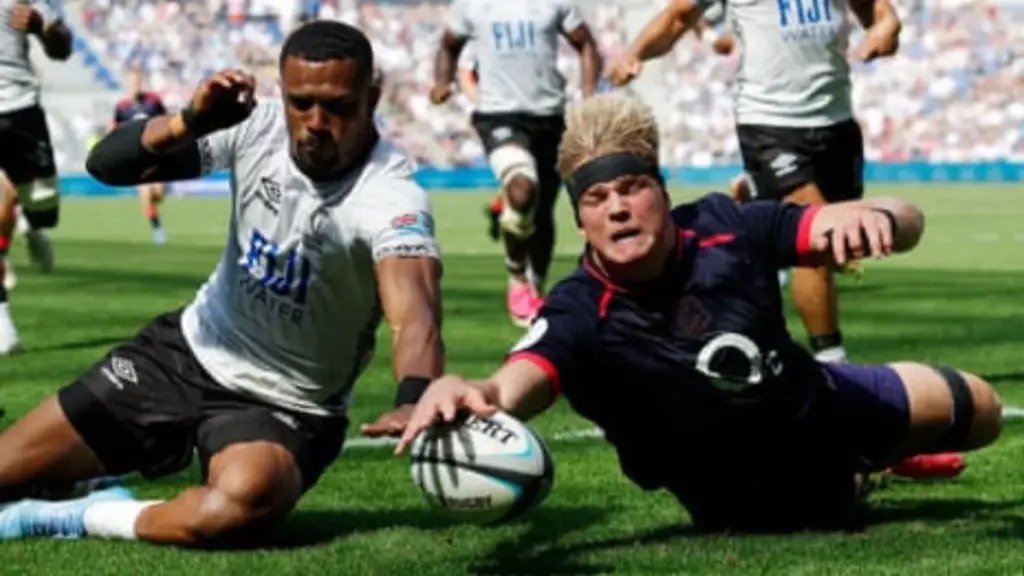
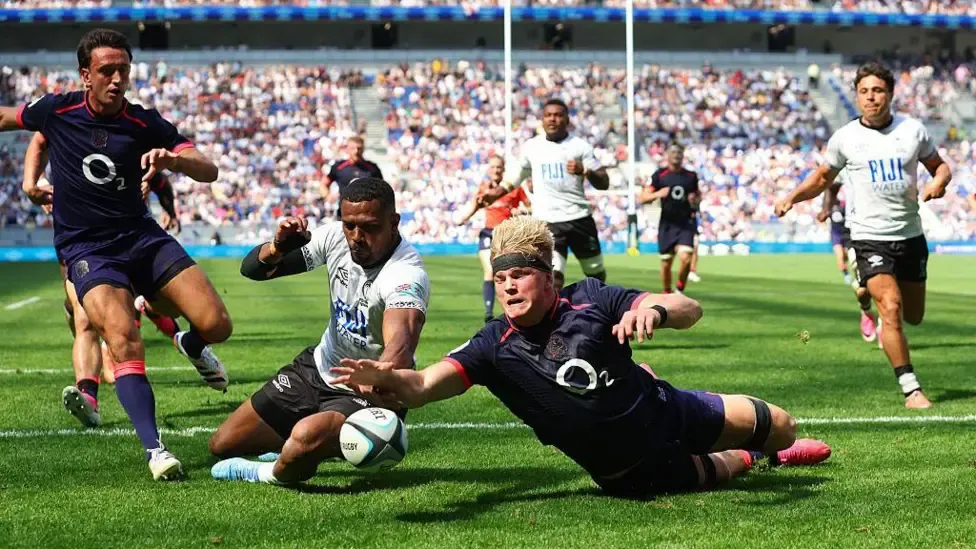
England secured a decisive 73-8 victory over Fiji, a match that offered a glimpse of the attacking potential Steve Borthwick‘s side has been seeking. The performance was highlighted by Henry Pollock‘s hat-trick of tries, leading to discussions about his potential inclusion in the starting lineup for future fixtures.
The win marked England‘s first in six Test matches, providing a much-needed boost after a period of disappointing results. While the opposition’s performance was noted as poor, the game allowed England to showcase a more vibrant and attacking style of rugby, particularly in the backline.
Pollock’s Impact and Selection Debate
Henry Pollock, who came off the bench, scored three second-half tries at Hill Dickinson Stadium, demonstrating his pace and ability to find gaps in the defence. His performance has intensified calls for him to start, with some observers suggesting he possesses the qualities to transform England‘s attack. Former England wing Chris Ashton, commentating for BBC Radio 5 Live, advocated for Pollock to start, noting his unique ability to mix things up and beat defenders with pure speed.
Pollock‘s try-scoring rate in Test rugby is noteworthy, with a try approximately every 56 minutes. His skillset extends beyond scoring, encompassing a significant work rate in ball-carrying and tackling, as well as accuracy around the breakdown in turning over possession. His ability to be in the right place at the right time, or to create opportunities when none seem apparent, distinguishes him.
Despite the impressive individual display, Borthwick remained non-committal regarding a starting role for Pollock, emphasising the team effort in creating scoring opportunities. He acknowledged Pollock as an outstanding player but also highlighted the presence of other top-quality back-row forwards within the squad. Borthwick‘s comments suggest a focus on collective performance rather than singling out individuals, even while acknowledging the desire for superstars in the game.
Pollock‘s only previous start in his 12 England caps was against Ireland in this year’s Six Nations, where the team faced a strong challenge. The Fiji game, with Fiji playing with a numerical disadvantage after a red card to Simione Kuruvoli and already trailing significantly, offered ample space for Pollock to exploit.
Tactical Considerations and Future Experiments
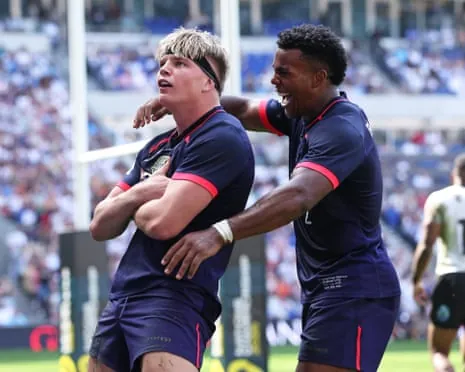
The match against Fiji also saw other promising performances, including debut tries from Noah Caluori and Benhard Janse van Rensburg, who both came off the bench. Borthwick is reportedly considering various combinations in the backline, potentially featuring Benhard van Rensburg and Henry Slade in midfield, with Manny Feyi-Waboso and Tommy Freeman on the wings. The inclusion of Noah Caluori, described as precociously talented, on the bench would offer a balance of pace and potential.
With limited opportunities for experimentation before the 2027 World Cup, Borthwick faces decisions on how to best utilise his talent pool. The coaching staff is also exploring tactical innovations, such as employing Marcus Smith at scrum-half, a position he played in his youth. This option became more pertinent following Alex Mitchell‘s hamstring injury, leading to Raffi Quirke being drafted into the squad. If Smith proves a viable option at number nine, it could open up strategic possibilities, including a 7-1 bench strategy.
England‘s approach to playing attacking rugby is becoming increasingly important, mirroring trends seen in other top international sides like Scotland and France. The team aims to develop a more incisive game, potentially incorporating a half-decent offloading game similar to Northampton.
Fiji’s Performance and Internal Questions
For the Fiji Water Flying Fijians, the 73-8 defeat to England, following a 39-24 loss to Wales, has led to significant questions regarding their performance and internal dynamics. Despite their classification as a Tier 1 team, their recent results in the Nations Championship have not reflected this status. The team’s discipline was an issue in the England match, with Levani Botia receiving a yellow card and Simione Kuruvoli a red card for retaliating against Ellis Genge.
The numerical disadvantage allowed England to exploit gaps and poor defence, resulting in 11 tries. Questions have been raised by fans and the Fiji Rugby Union (FRU) Chair John Sanday about potential issues within the team’s camp, including the relationship between Acting Coach Senirusi Seruvakula, management, and players. Sanday has expressed concern over the return on investment given the resources allocated to the team, stating that he does not accept sub-par performances. The Flying Fijians are scheduled to play Scotland at 1.10am Sunday.
Read Also
Source: theguardian.com

